Black tie & classic wedding invitations
A formal invitation, engraved in light
A formal wedding deserves formal manners. Ivory Letterpress opens on a cream envelope with a merlot wax seal: guests press and hold it (or tap Open), the seal cracks and the card slides up, with a solo piano behind it.
The builder knows the traditional rules: “the honour of your presence” for a house of worship, “the pleasure of your company” elsewhere, host lines for parents (including “the late”), and a spelled-out date. Choose British “honour” or American “honor”.
Designs for a black tie & classic wedding
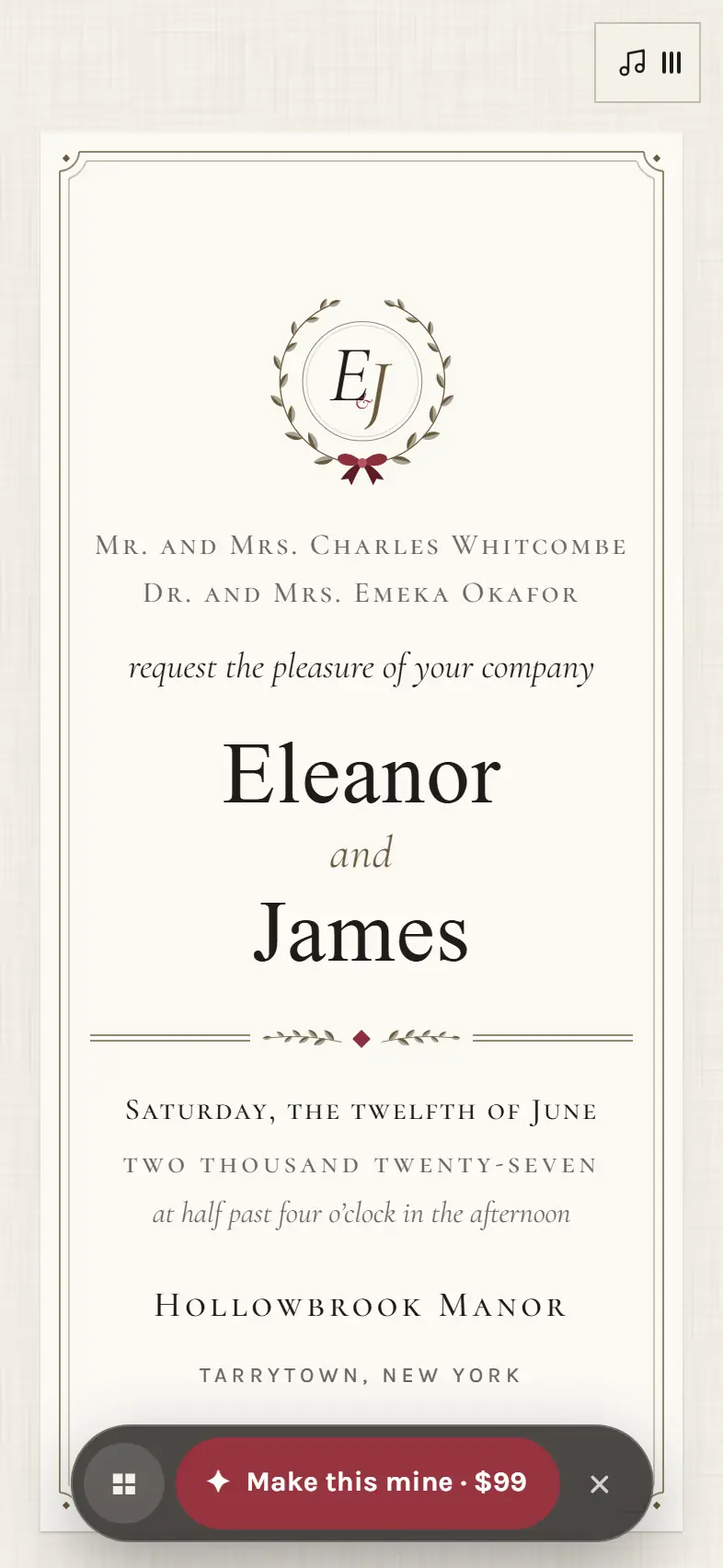
Ivory Letterpress
Ivory and brass, or the darker Candlelit mode.
Tips for your black tie & classic invitation
- Put “Black tie” on the event and let the explanation do the rest; Emily Post’s advice is not to put attire on the card itself, and the website is where details belong.
- Formal reply line: “The favour of a reply is requested by…”. The builder fills in your reply-by date.
- Each parent goes on their own line when hosts are divorced or remarried.
Questions couples ask
Does the invitation say “honour” or “honor”?
You choose. The traditional request line keeps the British “honour”, and many formal invitations still use it; the builder offers both spellings.
Can both sets of parents be the hosts?
Yes. The Wording step has host lines for the two of you, one or both sets of parents and “together with their families”, puts divorced parents on separate lines, and can remember a parent who has died with “the late”.
Should a formal invitation mention the dress code?
Emily Post’s advice is to leave attire off the card, except “Black tie” in the lower right corner if needed. On the website every event has its own attire line with a one-sentence explanation.
What if some guests reply by phone or mail?
Add their replies by hand in your dashboard. They count in the same totals, meal choices and CSV export as the replies guests send online.
Guides that help
Wedding invitation wording
Copy-ready wording for every host situation: parents, both families, the couple, divorced or late parents. Formal and casual versions.
Dress code wording
What each dress code means and the one-line wording to put under your invitation and on your website.
RSVP wording
Formal and casual reply lines, the three-to-six-week rule, and how an online RSVP replaces the M-line card.
Make this invitation
Pick the design, add your names and events, and watch it open before you pay.